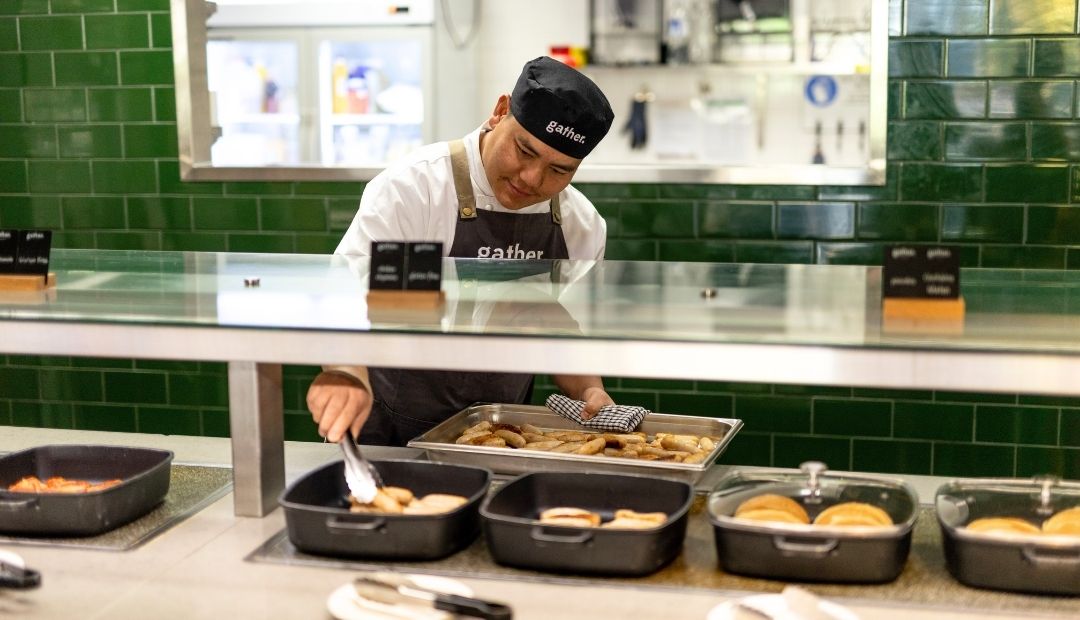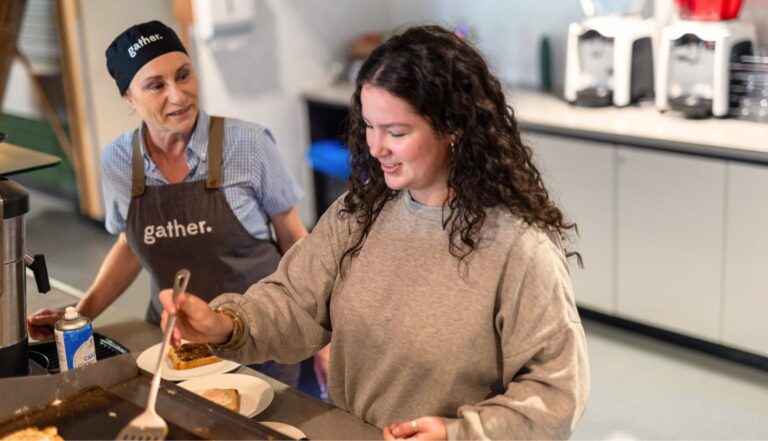
For Australian boarding schools and university residential halls, the choice between in-house and outsourced education catering comes down to who manages the service, what support is available, and how well the model meets student needs.
In-house catering means the school or residential college directly manages its catering workforce and operation. Outsourced catering means engaging a specialist provider to manage agreed services under a contract, while the institution retains oversight of the partnership.
Both approaches can deliver quality meals. Outsourcing is worth considering when catering places increasing demands on internal teams, or when the service would benefit from additional staffing support, dietetic expertise and operational management.
Whether you are reviewing an established in-house service or considering a catering partner for the first time, here are the six key areas to compare.
1. Who manages the daily operation?
Running a kitchen requires time and expertise beyond meal preparation. Recruitment, rostering, procurement, training, and service consistency all need attention throughout the year.
An in-house team can bring strong relationships and detailed knowledge of campus life. The institution also needs the capacity to support that team, particularly when a key employee is absent, or a role becomes vacant.
With outsourced education catering, agreed operational responsibilities sit with a specialist partner. This can reduce the coordination required from business managers, boarding leaders and residential life teams, giving them more capacity to focus on students and the wider institution.
The practical question is how much internal time catering requires today, and whether a partner could provide more consistent support.
2. What does the full cost include?
In-house catering is not automatically cheaper than outsourcing. Beyond food and wages, the full cost includes relief staffing, recruitment, training, purchasing administration, specialist advice and management time. These costs may sit across several departmental budgets, making them less visible in the kitchen’s operating costs.
An outsourced education catering partner can bring these responsibilities together within an agreed service model. Access to established procurement processes, recruitment support, staff training, dietitians and operational management can reduce the need to arrange and manage these resources separately. Clear pricing and regular reporting can also make it easier to understand what the service costs and what it delivers.
At gather by Cater Care, we bring together on-site catering teams, dietetic expertise and operational support in a service tailored to your community. Whether you’re reviewing boarding school catering or university residential catering, we work with you to develop a transparent pricing model that reflects your needs, helping you plan with greater confidence and reduce day-to-day management pressure.

3. What support sits behind the kitchen team?
An experienced kitchen team brings valuable knowledge of students, preferred meals and campus routines. Consider how each model supports those people to do their work consistently.
In Australia, menu discussions can draw on the Australian Guide to Healthy Eating. Schools and residential colleges should also ask how advice is translated into meals suited to their students’ ages, preferences and dietary requirements.
An outsourced partner can bring these resources together within one service, reducing the need for the institution to coordinate separate specialists. Your team should ask how that support works in practice.
Useful questions include:
- Who reviews menus and supports dietary requirements?
- How are new team members trained and supported?
- What happens when a key person is unavailable?
- How often does operational management visit the site?
At gather by Cater Care, education catering teams are supported by in-house dietitians and operational management. This provides specialist input alongside the teams preparing and serving meals each day.
4. How will the service reflect your community?
Food preferences, traditions and relationships help shape dining in both boarding schools and university residential halls. These deserve attention whichever operating model you choose.
An in-house team may have years of knowledge about the student community. A prospective catering partner should explain how it will learn from that knowledge, build relationships and involve students in shaping the service.
Ask how feedback is gathered, who reviews it and how changes are communicated. Students should be able to see that their input has been considered, keeping up with student dining trends, even when every request cannot be accommodated.
gather by Cater Care uses student feedback to help inform menus and service, with channels suited to each community. Where possible, we also retain and support existing catering teams, preserving local knowledge and relationships while introducing additional systems and support.
5. Can the model respond as your needs change?
Boarding school catering needs to work around sporting commitments, excursions, formal dinners and changing enrolments. University residential catering needs to accommodate lecture schedules, orientation, exams, college events and changes in occupancy during vacation periods.
With an in-house model, adapting to these demands depends on the capacity of the existing team and the institution’s ability to arrange additional support. When several requirements overlap, coordinating staffing, menus and service arrangements can place extra pressure on internal teams.
An outsourced education catering partner can provide access to broader staffing resources, operational expertise and flexible service options. This can help schools and residential halls ensure event catering success, respond to changing student numbers, or adapt to different meal arrangements, while supporting continuity in everyday dining.
6. What would a change involve?
If you decide to change catering models, transition planning should be part of the decision from the outset.
Clarify the proposed arrangements for existing staff, supplier handovers, student dietary information, communication and service continuity. Agree on responsibilities and a realistic timetable before the new service begins.
At gather by Cater Care, our approach starts with understanding each school or residential hall’s operations, community and priorities. We then develop a tailored proposal and mobilisation plan, followed by ongoing reviews as the partnership develops.
Choosing an approach that fits your community
The right education catering model should give your team confidence in daily delivery and provide a dining experience that works for students. Outsourced education catering is worth exploring when an institution needs more operational capacity, stronger specialist support or a service that can adapt as its community changes.
Start by identifying what your current service does well, where your team needs support and what you want to achieve. That creates a clear basis for comparing options and deciding what will serve your community best over time.
Considering your catering options? Explore gather by Cater Care’s boarding school catering and university residential catering, or speak with David O’Brien about your community’s needs.

To find out more, get in touch with David O’Brien to have a quick chat about how gather can provide your students and residents with a well-rounded and connecting mealtime experience.